
Pattern Introduction
I have been sewing for most of my life, but I don’t often think about what I am actually doing when I construct a garment. I begin with something flat—a piece of paper, a length of fabric—and through measurement, cutting, structure and adjustment, I make space for a body. While writing Pattern, I began thinking about the spaces that held me before I ever learned to construct anything myself.
Some of my earliest memories of New Orleans are architectural without me having known them that way: the divided spaces of 9000 Green Street, the long line of my grandfather’s shotgun house on Baronne Street, wood floors, altered doorways, rooms that changed according to the people living inside them. Pattern grew from the realization that perhaps I understood something about structure long before I had the language for it.
01
I begin with paper.
before fabric, before color, before the body enters,
there is a line.
Waist.
Hip.
Bust.
Measurements reduced to marks on a flat surface.
I draw where the body will bend,
where it will need room,
where it can be held.
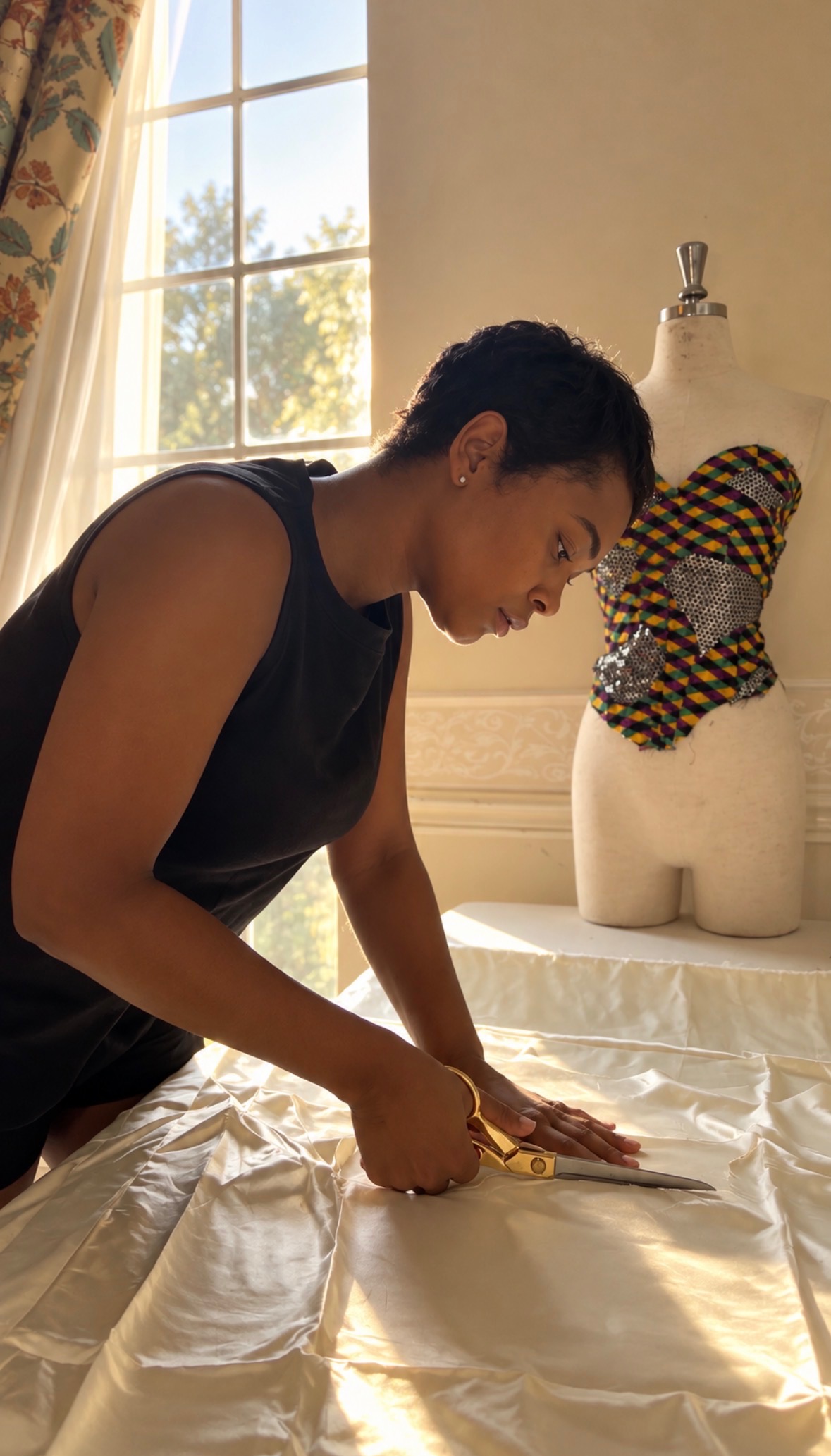
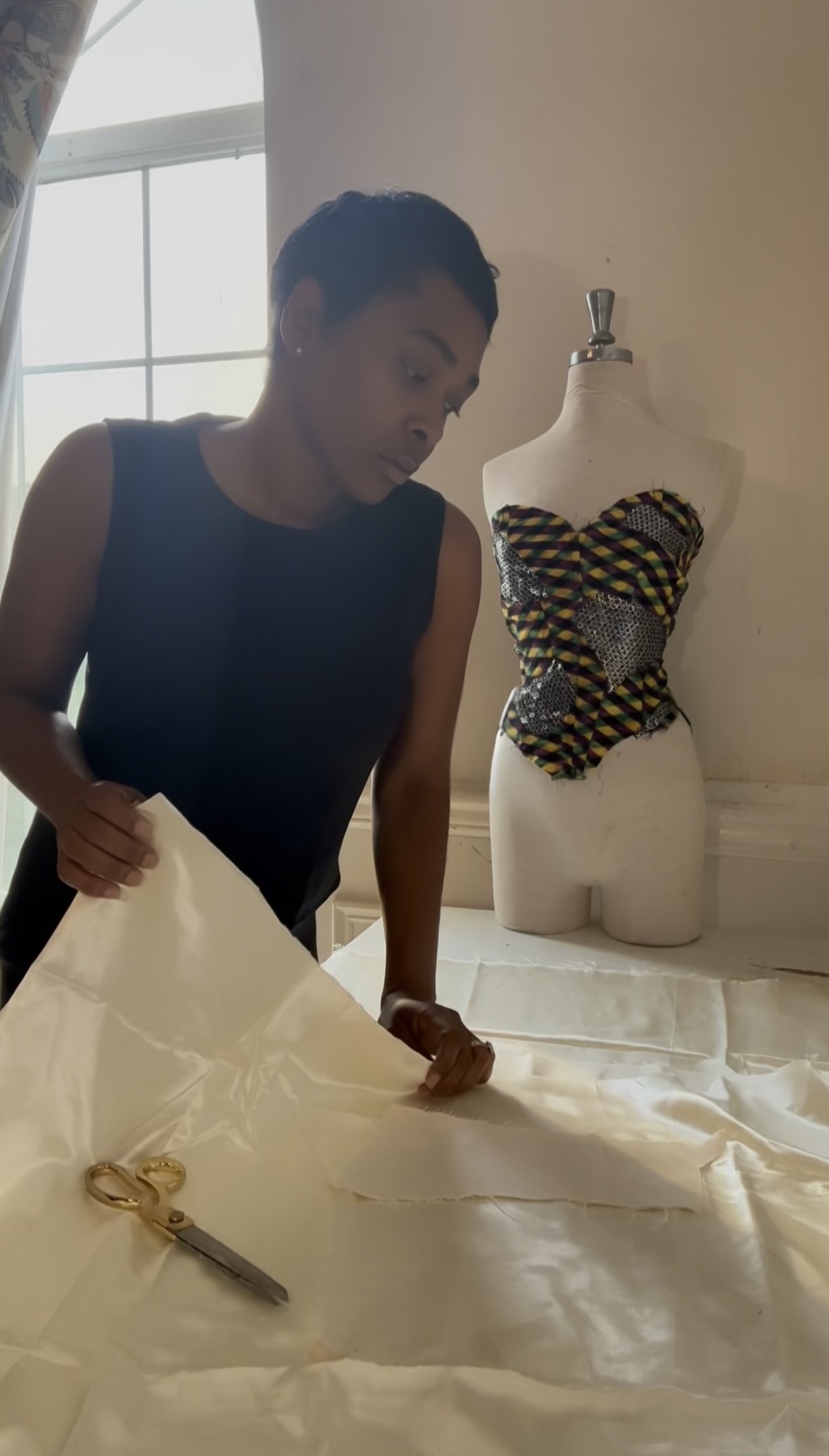
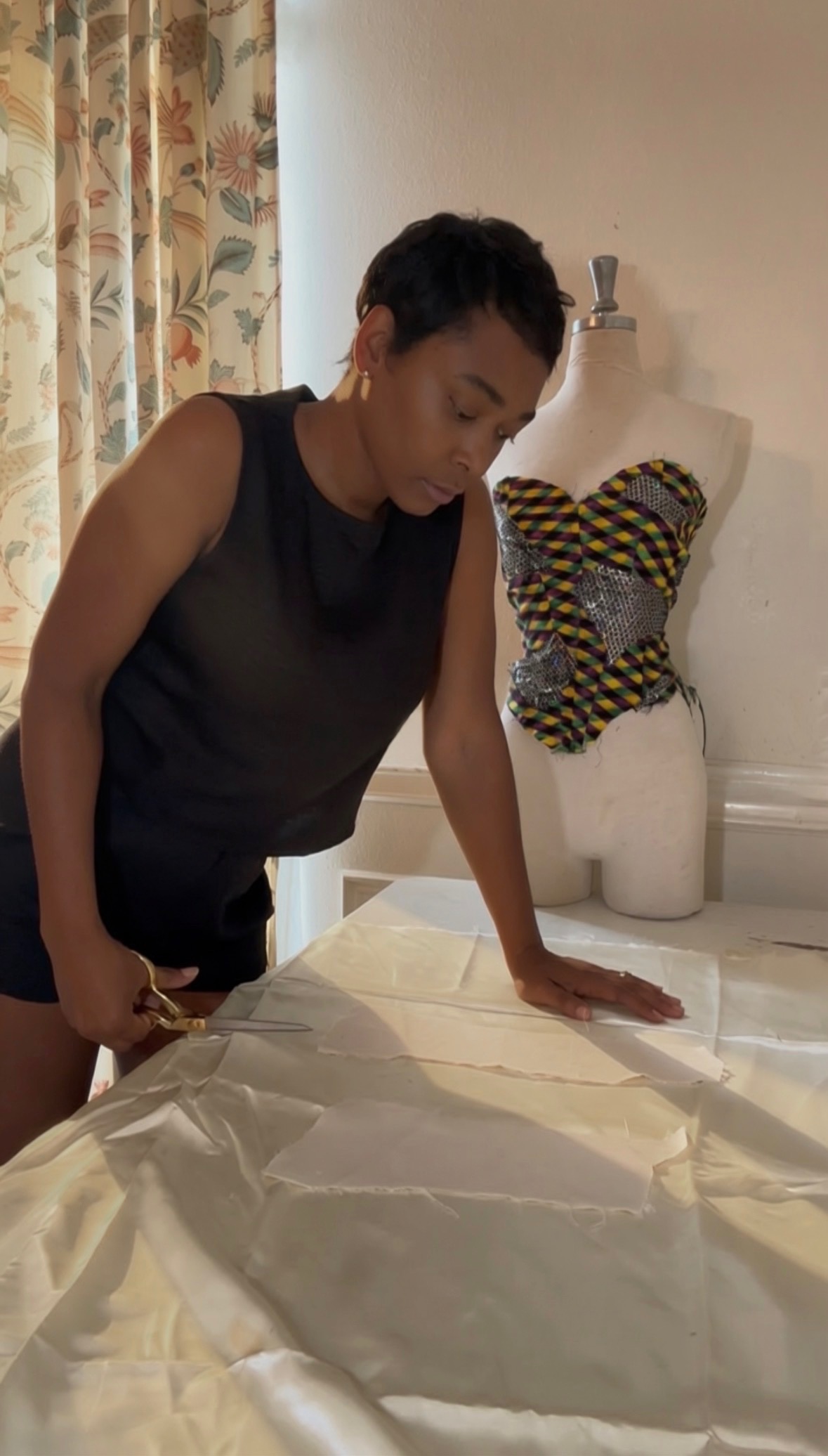
Then I cut.
A pattern does not look like a body.
Not yet.
It is pieces.
Curves that seem too severe.
Edges that do not appear
to belong together.
But I know what happens
when they meet.
I know that two flat things,
joined at the right angle,
can begin to make space.
I know a seam can change direction.
I know a fraction of an inch
can change the way something stands.
I know beauty
cannot hold itself up.
So i build underneath it.
Boning.
Channels.
Layers.
Interfacing.
A foundation no one may ever see.
The work that disappears
when the work is gooed.
An architect might call it structure.
I call it a corset.
But I think I knew structure
before I knew either word.
I knew it in houses.
At 9000 Green Street,
home began
three concrete steps above the street.
On one side,
there was hardly anything
between our door and the sidewalk.
On the other,
a yard
and a pecan tree.
02
I lived on both sides.
And between them,
the store.
One building holding different lives.
There were places in the walls
where doors had once been.
You could still see them.
One house had once opened into another.
My father closed them up.
The building changed
because the people living inside it
needed something different.
I didn't know
a structure could do that.
I only knew
there used to be a door there.
Twelve steps away,
the store could be full-
voices,
customers,
arcade machines calling from the corner-
and inside our house,
nothing.
The walls were thick.
The wood was good.
And beneath all of it
were the floors.
Real wood.
Long boards
running through the house.
As a child,
I believed one board
could run the entire length.
I never looked for the seam.
There was another house.
My grandfather's
on Baronne Street
You climbed the concrete steps
onto a wooden porch.
Then inside.
Living Room.
Bedroom.
Bathroom.
Bedroom.
Kitchen.
Backyard.
One long line.
No turns.
03
The house seemed to stretch
in both directions-
forward,
and up.
Those ceilings.
Ten feet.
Maybe eleven.
I didn't know to measure them then.
I only knew
how small I felt beneath them.
There was a fireplace
nobody used for fire.
Plants lived there instead.
Another part of the house
becoming what the people inside it
needed it to be.
Years later,
I stand over another flat surface.
This time, fabric.
I lay the pattern down.
smooth it with my hands.
Find the grain.
Pin it.
Then I cut.
Slowly.
A fraction of an inch matters here.
Too much removed
and I canoot put i back.
Too little
and the shape changes.
So I follow the line.
Around the curve.
Into the waist.
Up toward the bust.
Then the pieces meet.
I stitch them together
and something flat
begins to make space.
Boning goes where I need strength.
Layers disappear underneath.
I leave room
where the body needs to breathe.
Then comes the fitting.
Because the pattern
was only the beginning.
Now there is a body inside it.
It moves.
The house remembers differently than we do. It holds no photographs of the people who passed through it. Yet somehow, their presence remains. In the distance between one room and another, in the doorways we cross without thinking, in the ordinary places where life unfolds before we understand its significance.
Years later, we return to these places and discover that what once seemed like nothing was, in fact, everything.
